Sunday 'Close Enough' Toons
 A Pretty Weak 'Strongman': 'BradCast' 10/30/25
 'Green News Report' 10/30/25

 Previous GNRs:
 Proposal for 'First Politically Viable Wealth Tax' Takes Shape in CA: 'BradCast' 10/29/25
 Monster Storm, Endless Wars, Gamed Elections:
 'Green News Report' 10/28/25
 Let's Play 'Who Wants
 Sunday 'Cartoonists Dilemma' Toons
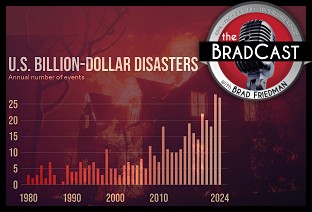 Exiled NOAA Scientists Resurrect Critical Disaster Database: 'BradCast' 10/23/25
  'Green News Report' 10/23/25
 Trump-Allied GOP Partisan Buys Dominion Voting Systems: 'BradCast' 10/22/25
 Trump, Republican Law(lessness) & (Dis)Order: 'BradCast' 10/21/25
 'Green News Report' 10/21/25
 Celebrating 'No Kings': 'BradCast' 10/20/25
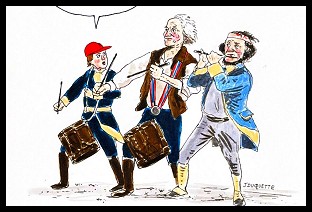 Sunday 'How It Started' Toons
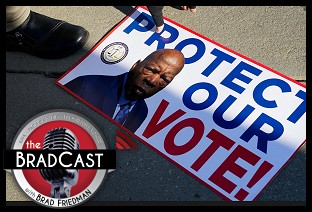 SCOTUS Repubs Appear Ready to Gut Rest of Voting Rights Act: 'BradCast' 10/16/25
 'Green News Report' 10/16/25
 The 'Epstein Shutdown' and Other Autocratic Nightmares: 'BradCast' 10/15/25
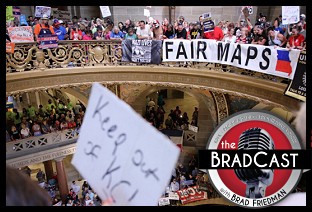 Group Vows to Block MO's GOP U.S. House Gerrymander: 'BradCast' 10/14/25
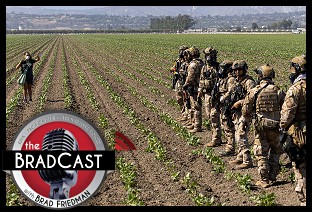 Trump Labor Dept. Warns Trump Policies Sparking Food Crisis: 'BradCast' 10/9/25
 Trump's Losing Battles: 'BradCast' 10/8/25
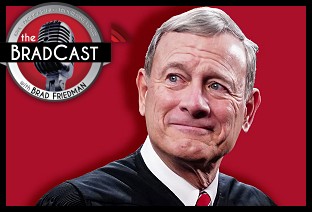 Trump, Roberts and His Stacked, Packed and Captured SCOTUS: 'BradCast' 10/7/25
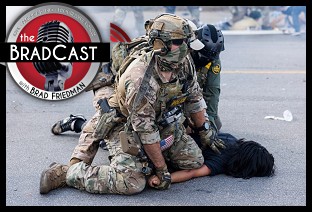 Trump Attempting His 'Invasion from Within': 'BradCast' 10/6/25
 Biden Budget Expert: Mass Firings in Shutdown 'Illegal': 'BradCast' 10/2/25
 Why is DOJ Suing 'Blue' States for Their Voter Databases?: 'BradCast' 10/1/25
 VA GOP VOTER REG FRAUDSTER OFF HOOK
 Criminal GOP Voter Registration Fraud Probe Expanding in VA
 DOJ PROBE SOUGHT AFTER VA ARREST
 Arrest in VA: GOP Voter Reg Scandal Widens
 ALL TOGETHER: ROVE, SPROUL, KOCHS, RNC
 LATimes: RNC's 'Fired' Sproul Working for Repubs in 'as Many as 30 States'
 'Fired' Sproul Group 'Cloned', Still Working for Republicans in At Least 10 States
 FINALLY: FOX ON GOP REG FRAUD SCANDAL
 COLORADO FOLLOWS FLORIDA WITH GOP CRIMINAL INVESTIGATION
 CRIMINAL PROBE LAUNCHED INTO GOP VOTER REGISTRATION FRAUD SCANDAL IN FL
 Brad Breaks PA Photo ID & GOP Registration Fraud Scandal News on Hartmann TV
  CAUGHT ON TAPE: COORDINATED NATIONWIDE GOP VOTER REG SCAM
 CRIMINAL ELECTION FRAUD COMPLAINT FILED AGAINST GOP 'FRAUD' FIRM
 RICK SCOTT GETS ROLLED IN GOP REGISTRATION FRAUD SCANDAL
 VIDEO: Brad Breaks GOP Reg Fraud Scandal on Hartmann TV
 RNC FIRES NATIONAL VOTER REGISTRATION FIRM FOR FRAUD
 EXCLUSIVE: Intvw w/ FL Official Who First Discovered GOP Reg Fraud
 GOP REGISTRATION FRAUD FOUND IN FL


The following is a transcript of the Peter B. Collins Show on KRXA 540-am, Monterey, California on October 24, 2005.
The in-studio guest was Monterey County Registrar of Voters, Tony Anchundo. He brought with him one of the new Sequoia DRE (touch-screen) voting machines, to be deployed for the first time in Monterey, during the November 8th, 2005 Special Election in California.
Brad Friedman, of The BRAD BLOG, joined them by phone for the extraordinary hour. You can listen to the audio version of the hour in MP3 format is here. Brad blogged about it all here.
PETER B. COLLINS: Good afternoon, ladies and gentlemen,
this is KRXA-540. I'm Peter B. Collins and we've made some technical
adjustments in our studio here this afternoon to welcome the
Registrar of Voters for Monterey County, Tony Anchundo, who joins
us. Good afternoon, Tony.
TONY ANCHUNDO: Good afternoon, Peter B.
PETER: And you brought in a Sequoia electronic voting machine,
it's right here in our studio.
ANCHUNDO: Yes, this is a new era in voting in Monterey County and
so what we have here in front of us is a DRE voting system, Direct
Recording Electronics, commonly referred to as touch screen voting.
PETER: Okay and what's one of these babies cost?
ANCHUNDO: Well, the actual device, with the VeriVote Printer,
estimated about $4,000.
PETER: Okay and the VeriVote Printer is something I think many of
our listeners are interested in, Tony. We live in a world where many
people react to the election results of 2000 and 2004 - and they
have deep suspicions about the honesty and integrity of our voting
systems. And in particular, electronic machines, whether it's touch
screen or other types, that do not include some sort of a
voter-verifiable paper trail, have caused great concern among voters
and election advocates. Does that printer that you describe, produce
a receipt that I come away with after I vote?
ANCHUNDO: Well, first of all, I wanted to just assure all your
KRXA listeners that this technology has been around for many years,
but this is the first time that a voter-verifiable paper report will
appear to voters. They don't actually get a receipt, it's an
opportunity for them to verify with the paper report, that the votes
that they voted were cast properly and they can review it and then
cast their ballot and you know, leave the polling place knowing that
there's some integrity and honesty to the voting system.
PETER: Okay, now we'll come back to that issue for sure and
shortly we'll be joined by Brad Friedman, our friend from BradBlog.com.
But Tony, first, could you walk me through a voter experience on
this Sequoia machine?
ANCHUNDO: Well, this is the first time that voters, at the
precinct level, will have an opportunity to vote the DRE touch
screen voting. In 1999, voters had the opportunity here in Monterey
County, to try this technology at our early voting locations. We had
them in Delmonte, a shopping center in Northridge, South County and
North County. But this is the first time, again, that they'll have
this opportunity to do it at the polling place. What we have to
identify is first, once a voter comes into their polling place, they
have to be a registered voter, so they will sign the roster,
determine eligibility, and at that point and time, then the poll
worker will insert a voter card into the activation unit. The
activation unit just tells that particular card, that this voter is
eligible to vote. They will punch in a three-numeric code device, at
that point and time hand it to the voter, the voter then goes ahead
and inserts it into the [inaudible] device.
PETER: I'll do that in just a second, I want to describe the
activator, which is a box about the size of a Playstation, or an
Xbox, and it features a display screen at the top and there is an
insert where this card, that is a plastic, digitally encodable card,
the kind of thing you use at a hotel room. People are very familiar
with these, these days, credit card size. What you did is inserted
it and based on the verification of my information, that I'm a
registered voter, you then issue me this card, which enables me to
go to the DRE machine itself, and now if I can bring this microphone
over a little closer, I'm going to insert this in the yellow slot
here, that is very obvious. I would not be confused, there's no
other slot where I could accidentally insert it. So I push it in and
now it's asking me whether I want English, or Espanol, and I'll
choose English. Now it's giving me a choice of candidates...
ANCHUNDO: And of course this a demonstration device, so some of
the choices you have are from some of our elected officials from the
past. But let me just back up....
PETER: You know, I've always wanted to vote for John F. Kennedy,
I was too young at the time.
ANCHUNDO: Well, you know, I've always had a desire to vote for
good 'ole Abe Lincoln. But let me just step back a little bit,
Peter. The activation device, only the code that's placed inside is
the precinct code, it does not identify the individual voters. So,
every voter will have the same activation code. Again, that
represents the precinct and that tells the voting device itself, the
touch screen device, what precinct this voter is in.
PETER: Alright. So, I am voting for John F. Kennedy for
President.
ANCHUNDO: And you can touch any portion of that voting section
there. Now what has happened is that you, in the President of the
United States, you are allowed to only vote for one and that's one
of the features of this technology. It will not allow you to
over-vote. So I noticed you tried voting for....
PETER: For Marshall, yeah.
ANCHUNDO: ...and Thomas Jefferson, but it won't allow you. But in
the event you decide to change your mind, go ahead and press John
Kennedy again.
PETER: Okay, that unselected that, so I can change to Abraham
Lincoln.
ANCHUNDO: Absolutely.
PETER: But once I select that, my other options are
inactivated...
ANCHUNDO: They go away. So again, that's one of the unique
features and because of the Help America Vote Act, of 2002, and the
problems that occurred in Florida in the 2000 Presidential Election,
one of the mandates, Federally that Congress passed, is that every
voter has to be assured, at the precinct level, that they cannot
over-vote. It's called second chance voting. Again, this technology
affords that.
PETER: Okay. So, I'm going to skip over these other candidate
categories and just go to the next screen here and I'm not going to
vote for State Senate or County Commissioner and I'm going to skip
the ballot measures here and that of course does mirror some voter
behavior. There are some voters who come out and only vote for
President and don't vote for anything else.
ANCHUNDO: And that's one of the beauties. You can under-vote, but
it will not allow you to over-vote.
PETER: Okay.
ANCHUNDO: Okay, now if you look at the summary, it shows - the
red shows that there was no selection made. So in the event you
decide that, okay, I did want to vote for State Senator, you touch
that section and it takes you back to that portion of the ballot.
PETER: Alright, I selected Ceasar Chavez there.... and then I go
through the referenda again and so we now have that vote reflected,
but none of the other votes that I passed up have been changed...
ANCHUNDO: So you're there now at the point where you're satisfied
with those selections, just follow the instructions.
PETER: Next - okay.
ANCHUNDO: Now at this point and time, you're going to touch where
it says, "touch here" and then it will allow you to
see....
PETER: It says here, touch here to print and review a paper
record of your ballot.
ANCHUNDO: And then it asks you again...
PETER: It says do I want to cast my ballot, am I sure? And I'm
ready, I say yes, cast ballot.
ANCHUNDO: And viola,
PETER: Now I hear a printer activated.
ANCHUNDO: Now you review your choices on the print report.
PETER: Oh, I see, it's over here, okay.
ANCHUNDO: And it is, again, a report. It's not a receipt. The
voter's not allowed to take that receipt. It's just there for you to
review.
PETER: Alright, so here at the time, at the polling place, and
you know, it's fresh in my mind, I know who I just voted for, and in
this case, the test, I only voted for President and for State
Senator, and it has accurately reflected those and so, I do have a
chance here to make changes, if I wanted to.
ANCHUNDO: Yeah, if you're not satisfied with those selections,
you can go ahead and make the changes.
PETER: Alright, at the risk of making this go too long, I'm going
to go back and select United States Senator. The printer just put
the word "voided" on the ballot information that had been
previously gathered, and now I'm going to vote for Dwight
Eisenhower, as United States Senator, and go through the rest of the
screens here. Touch here to print and review. Now, to the left of my
touch screen, is where the printer is located. I press cast ballot
and it once again, will generate a paper copy of the votes that I
just made.
ANCHUNDO: And if you're, at this point, satisfied with your
choices, then you'll go ahead and cast your ballot.
PETER: It just made a little zippy phone noise. Now it says
recording vote. It says vote recorded and at the bottom of my, it's
not my personal receipt, but of the printout - it says that the vote
has been accepted. And now the printer is scrolling forward, to
remove from view my voter information, so that the next person who
comes over will not be able to read it.
ANCHUNDO: Okay, Peter, you have actually had an opportunity to do
this before, because I mean you sound like an expert.
PETER: I use optical scanners.
ANCHUNDO: Very good, very good.
PETER: That's the type of voting machine I've used. Alright, does
that concl...oh, now we have the card, my voter card, just popped
out at the conclusion of that cycle, and I give that back to the
clerk?
ANCHUNDO: We will have a poll worker who will be responsible for
recovering those cards. Now let's say in the event we have a crowded
polling place and the poll worker is just for some reason delayed in
their response, the voter decides - well, I've got this card... let
me see if I can try voting again while someone's not paying
attention.
PETER: Alright, I'll insert it here just for grins. It said this
voter card is not valid, please ask for assistance. So if I try it
again, does somebody come and escort me to jail?
ANCHUNDO: At that point, the voting police will escort you to my
office and then I can't tell you on the radio what I will do. *Peter
laughs* So, it clearly shows that the voter cannot vote a second
card at that point, and then the poll worker will come and assist
and then have the card removed. So in order to remove the card....
PETER: Oh, so right now the card is locked in there, because I
made an unauthorized attempt.
ANCHUNDO: Exactly. And this device just will not be allowed to be
used again until we....
PETER: I better get the hell out of here.
ANCHUNDO: You're in trouble.
PETER: Okay, now we're going to take a break and check traffic
and we'll return with Tony Anchundo. We're also going to be joined
by Brad Friedman, from the BradBlog.com.
He knows more about electronic voting than I do. We'll get him to
review the demonstration you just heard and then we'll ask some
questions about how this all works and is it hack-proof? Either at
this stage, or at the tabulation stage. That's what we'll talk about
next and if you have a question or a comment, you can join us right
now at 899-KRXA. We're going to talk about electronic voting this
hour and if you have questions or comments, this is your perfect
opportunity to come forward now, 899-KRXA. That's (831) 899-5792.
You're listening to KRXA-540.
{BREAK}
PETER: And we'll continue in just a moment here, on KRXA, we're
trying to get our computer under control.
{BREAK}
PETER: Alright, let's check traffic now, it's 5:19 and Metro
Diane is on the case. Go ahead Diane.
*Diane gives traffic report*
{BREAK}
PETER: It's 5:20 now, from KRXA 540 and we continue our
conversation with the Registrar of Voters for Monterey County, Tony
Anchundo, who's in the studio with us, along with his touch screen
voting machine that he brought in. We just completed a
demonstration, I hope you had a chance to listen to that and Tony,
we do have one complication. It appears that your electronic voting
machine caused our main computer here to crash.
ANCHUNDO: Well, I can take responsibility for many things, but I
refuse to take the responsibility for your computer crashing.
PETER: *laughing* Alright, we won't press charges.
ANCHUNDO: Okay.
PETER: And Hal's here trying to fix it right now. Hal, let me
know when you get it back under control. Now, Brad Friedman, is our
expert on electronic voting and he has looked at these issues in
some detail and you can read his work at BradBlog.com.
Hello, Brad.
BRAD FRIEDMAN: Hey guys, how are you Peter and Tony?
ANCHUNDO: Brad, how's it going?
BRAD: Very well.
ANCHUNDO: Good.
PETER: Now what questions do you have, just resulting from the
demo, that we just did on the air here.
BRAD: Well, you know, I have a couple of questions from the demo
and from what you guys have mentioned. First, Mr. Anchundo, I was
just curious, what type of system were you previously using, prior
to this?
ANCHUNDO: Well, we had a [inaudible]
punchcard and as you know, the federal and state authorities
decertified all punchcards throughout the nation. So, we had a
couple of choices. Last year we began Phase I of the new voting
system, with an optical paper ballot and then because of the
necessity to comply with the HAVA Federal Mandate, we needed to get
into this technology, to assure that we can again, comply with the
issues and concerns with voting.
BRAD: What were the federal mandates that requires you to move
from the optical scan to the DREs?
ANCHUNDO: Well, we have a combination. The absentee voter will be
voting on optical scan and in our county, we have almost half of our
registered voters, who vote absentee. In order to assure that the
voters at the precinct level do not over-vote, this is one of the
beauties of this technology, it won't allow them to do that,
over-vote. In addition, there are certain ADA issues that have to be
met. A voter has to have the opportunity, by themselves, and to vote a
secret ballot. So someone who has a sight issue, or is blind, this
system also has an audio device, that walks them through the voting
process.
BRAD: But, my understanding, maybe you can clarify it, and
votersunite.org has reported on this, they have a booklet called,
"Myth Breakers" - are you familiar with that?
ANCHUNDO: I've heard of many of different publications. That one
in particular, no, I'm not aware of.
BRAD: Yeah, because they said that there really wasn't a need for
a lot of folks who were using the optical scans and so forth, to move
ahead, that HAVA does not mandate that you do that. So, that's
interesting, but I'm curious, mostly, as you guys were talking,
unfortunately it's radio, so I couldn't see it, but you said there
was a paper report printed with each vote. Now, is that a paper
ballot?
ANCHUNDO: No, that's a paper report. It's just a verifiable paper
report that the voter is allowed to review, before they make their
final decision and cast the ballot. So, it's just a - it replicates
what they had touched on the voting device.
PETER: And Brad, just to help you visualize it...
BRAD: Yeah.
PETER: As you're facing the touch screen, on the right hand side
is a wing that has instructions on how to use the machine and
really, the companion to it on the left, is this printer device with
a window that allows you to see the paper. It's like a roll of
receipts from a gas station, or an ATM, it's about three inches wide
- maybe two and a half - and it scrolls upward and as I described,
it first prints out the information and it was consistent and
accurately portrayed the votes that I had made...
BRAD: Right.
PETER: And it allows me to see that and then I have the
opportunity to recheck that, I can make a change, or I can just
authorize it, essentially, to go to print.
BRAD: And when you, I noticed that you voided one of those
choices. Was that after you had printed the - after the ballot had,
the paper record had originally been printed?
PETER: Correct.
BRAD: And what happened to that voided paper?
PETER: It just rolled over. Where did it go, Tony? It rolled over
into the back.
ANCHUNDO: It just scrolled, as you mentioned, and it's on a spool
and it will just stay there attached to it, till the end of the
evening, or in a case in a major election, if more than 200 votes
are cast, then that would be time...
PETER: Time to change the toilet paper.
ANCHUNDO: ...to remove and put on a new roll of toilet paper,
correct.
BRAD: Yeah, and is that voided one, you said it was marked
voided, was it marked over the ballot? Clearly voided on the actual
votes themselves?
ANCHUNDO: Well, the votes are stored on a cartridge and that's
inevitably will come to us on election night. But one of the things
that Peter and I were talking about, and some of his staff members,
that you know, we are going to do an accountability. We are going to
go through at the end of the evening and to assure that those paper
reports coincide with the results of that particular precinct. So,
it's voided on the paper, but it's also voided on the cartridge.
BRAD: But I mean, is the word voided, cause I understand a
problem with the Sequoia toilet paper rolls, is that when they mark
voided - that it's very difficult when you then go back to count
them manually, to determine the voided votes, from the actual votes,
because it keeps the voided votes right there with the actual votes.
PETER: Well, to your point, Brad, as I looked at it, and I'm not
an election specialist, but the paper report was specific to my
voting and at the bottom of it, the word void was in large type,
larger font than the regular type that reflected the voting report.
But to be specific, it does not print over the printed results that
I had previously put in there.
BRAD: So if someone was manually counting off of that paper,
there could be confusion as far as which ones were the voided votes
and which ones were the legitimate votes?
ANCHUNDO: Oh, absolutely. But one of the necessities of any new
technology, regardless if it's for voting or for any industry, that
there is a learning curve and we're certainly going to have to spend
some time and...
PETER: I would offer, excuse me Tony, that this is far less
subjective than a hanging chad, or even a dimple chad - or my
nephew, Chad.
BRAD: Sure, right, I guess the question though is, you know, is
it less subjective than a vote count and it sounds like Mr. Anchundo
is suggesting that the vote count will actually be taken from the
cartridge. So in other words, when one votes, and you see that
result on that piece of paper, how does a voter, or anyone else know
that what is actually marked on the cartridge, is the same as what's
on paper?
ANCHUNDO: Well, how will the voter know? They won't know,
obviously, at that time. There is obviously going to have to be some
trust and faith in the elections official, or in this case, it's me.
You know, I wouldn't even think about rolling something of this
nature out to the electorate, unless I felt convinced. There's been
a tremendous amount of time and energy testing and yes, there's
always going to be issues and concerns. But again, I believe there's
enough checks and balances and in the official canvass, you know,
after the election - that will be an opportunity to assure that the
integrity of the process has been upheld. And, I'll tell you right
now, and I'm telling all the KRKA listeners...
PETER: KRXA.
ANCHUNDO: Oh, sorry, KRXA listeners, that if there is a problem,
if there is some concerns and the integrity is not upheld, I'll be
the first to come out and say, we're going to do this all over
again.
BRAD: When you say do it all over again, what do you mean?
Re-vote?
ANCHUNDO: Well, if we have to, I'll go and sue myself and go
before a superior court judge and ask that we do the election again.
BRAD: Well, let's say there is a discrepancy between the
cartridge votes and what's on the paper - and I'm not sure how
you're going to audit them, but, let's say however the audit is, a
variegated audit, or you do a complete hand recount and they don't
match up, uh, which is the ballot of record? The paper or what's on
the cartridge?
ANCHUNDO: Well, again, if they don't match up, we obviously have
an issue. And then at that point I will have to make an
administrative decision and I have no problem coming forward and
saying that, you know, I'm not convinced, I'm not satisfied with the
integrity of the ballot count. But again, I would not even go
forward with this technology unless it had been proven. And there
have been weeks of logic and accuracy testing, within our office, in
preparation for November 8th's election.
PETER: Now Tony, could you just give me a brief demonstration.
Can you show me where the cartridge is and if it's removable, can
you pull it out?
ANCHUNDO: The cartridge is behind the screen itself and we have a
seal on it, so I don't want to break the seal at this point and
time.
PETER: Okay, is it a standard component, like a zip disk, or?
ANCHUNDO: It's similar to a zip disk, correct.
PETER: But is it proprietary, so that I could not substitute a
zip disk for that?
ANCHUNDO: Absolutely. It is proprietary software and so if you
attempted to put another type of disk inside it, it obviously
wouldn't read it.
PETER: Alright, Brad, hang on, we're going to take a break and
when we come back I think, if we're in sink here, I want to move to
the tabulation phase and talk about how the votes that are collected
on this cartridge, are then transferred into the computers that make
the final tally and produce the vote count. Is that cool with you?
BRAD: Fine with me, I had some other questions on that other
stuff, but I'll go forward with you.
PETER: Well, we'll come back and deal with those, before we move
on to tabulation. Okay?
BRAD: Alright.
PETER: That's coming up next on KRXA. I'm Peter B. Collins. In
the studio with me is the Registrar of Voters for Monterey County,
Tony Anchundo. On the line is Brad, from BradBlog.com
and you can get on the line too. We'll take your calls in the next
segment.
{{BREAK}}
PETER: You're listening to KRXA 540. November 8th is the special
election in California and we're talking about the techniques that
are going to be used here in Monterey County, the new DRE machines.
These are electronic touch screen voting machines, with a paper
report that is visible to the voter. The voter does not leave the
polling place with a printed receipt, but it does provide
verification on the scene, at the time of voting, for the voter, him
or herself, to evaluate whether the machine properly captured the
intended votes. Our guest is Tony Anchundo, he's the Monterey County
Registrar of Voters for the whole county and Brad, Brad Friedman,
from BradBlog.com, is on the
line with us. Brad, I wanted to let you ask the rest of your
questions about the voting machine itself, and then we'll talk about
tabulating, and the hackability of that phase of the voting process.
BRAD: Uh, yeah, and first by the way, I want to thank Mr.
Anchundo for coming out and being willing to talk about this and
answer these questions. It's obviously very important that the
voters, you know, have confidence in the vote, it's the most
important part of democracy. And that brings me to a question. You
suggest that we should trust you, that everything is okay here and
that you'll make a decision - I guess there's nothing in law, about
whether it's the cartridge count, or the paper count, which becomes
the ballot of record. But, I'm concerned about faith-based voting.
*Peter laughs*
PETER: Lemme just jump in, Brad. You basically are implying that
you prefer the paper record, that that's a tangible item that cannot
be changed through remote access by computer, for example.
BRAD: Well, yeah, and also the paper is what is actually
validated by the voter and Mr. Anchundo suggests that what's written
to the memory cartridge is the same as what's on the paper, but
admits that there's really no way that the voter knows that. So I'm
not sure how we will know that our vote is to be counted accurately
at all.
ANCHUNDO: Well, again, and believe me, I've heard these questions
and concerns over the years and when we first rolled this voting
system out in 1999, we certainly didn't have the same number of
people out there that had similar concerns. But again, I believe -
and you know, as I mentioned earlier, that trust and faith in the
elections official is important. But this technology would not be
available, at any level, unless both the federal and state
authorities provided that type of support. So again, it's just not
my trust and faith that you have, that they've gone through
stringent tests to ensure the integrity. And I would not have even
come close to using this type of system unless I had used it before.
But, we do have that voter-verifiable paper receipt and I will have
an opportunity to go through each and every precinct, to assure that
what comes out on the tabulation, supports the same record that
comes out on that report that the voters get to see when they cast
their ballots.
BRAD: Well, in regard to, uh, you say that federal authorities
have approved this system, you are familiar with the non-partisan GAO
report that came out on Friday?
ANCHUNDO: I'm familiar with all the reports that pretty much have
come out, concerning DRE voting.
BRAD: Right. On Friday, the GAO put out over a hundred and seven
page report saying that, in fact, confirming to those of us who have
security concerns about these machines and they confirmed that in
fact, votes were lost and miscounted in the last election, that
there was problems with all of these machines, uh, and so, and in
fact Sequoia, itself, who's machine's you're using, is currently
facing a lawsuit in Snohomish County, Washington, concerning exactly
some of the things that we're talking about. So, I think you're a
good guy, I have no reason to... are you guys partisan officials or
non-partisan officials?
ANCHUNDO: We're non-partisan. I'm not an elected official like in
some other counties, I'm appointed by a County Administrative
Officer.
BRAD: Is the County Administrative Officer a....
ANCHUNDO: It's a non-partisan office, also.
PETER: Yeah, in California, they're non-partisan.
BRAD: Non-partisan, well that's good to know. But you know,
surely, I'm sure you could understand that some people - I don't
have any problems trusting you, but some folks might be concerned
that a voting system that relies on your good faith here, with
machines that have been proven to cause problems all over the
country, is not a great way to run an election and people have a
good reason to be concerned and even you suggest that the papers,
the recount, if there is one, you know, there's no rules in place
for whether it's the paper or the... *station jingle for Tom Hartman
plays*
PETER: Thanks, Tom. Go ahead. Tom just jumped in there, we're
blaming the voting machine.
BRAD: Well, he's got some opinions about voting machines too. But
as I said, you admitted there was no rule, I guess, or law in place
about who's count wins, if there is any discrepancy, and I'm
wondering what type of discrepancy would cause a full hand recount
of those toilet paper rolls...
PETER: Yeah, what level would the discrepancies have to rise to
Tony?
ANCHUNDO: Well, first of all, the California Election [inaudible]
provides if in the event there is any tampering, if there's
misconduct at a polling place, if anyone in the elections department
has undermined the integrity, then immediately there can be a
contest, or a recount filed. So it certainly doesn't have to come
from me, if there's something that has occurred, in the election's
process, that would certainly generate some opportunity for a
contest. But again, you know, I've been in elections for thirty-one,
plus, years and there's always the possibility that there could be
issues. Even with paper. So, you know, paper is not, by far, the
most error-proof. There is, of course, an audit trail, but I have
seen many things happen. Again, what happened in Florida in 2000 and
that happened probably in every state throughout the nation at some
point and time. So paper is not one-hundred percent either.
BRAD: Well, nothing is one-hundred percent, but you said it's not
the most fail-proof, I'd be curious what is more fail-proof than
paper, but..
ANCHUNDO: Well, what happens if you lose, if on your way, after
the poles have closed and you have your poll workers, and this has
actually happened, where the poll worker sets their paper ballots on
the roof of their car, as they're setting their supplies in, forgets
that the ballots are on the roof, takes off and has no ballots.
PETER: They were lost?
ANCHUNDO: They were lost, they were just scattered all over the
street... I mean...
PETER: A couple of elections ago, there were boxes of ballots in
San Franciso, that fell off a pier, into the bay.
BRAD: Well indeed, the chain of custody is very important. But he
said that there was something more.... less foolproof than paper and
I'm not sure what it is, but in the event of a recount, whether
there is, you said if there was [inaudible]
that might trigger a recount. But again, in that recount, the
question becomes - is it the paper or is it the electronics that are
going to be used as the final arbiter and it sounds like, Monterey
County at least, does not have any laws in place to determine that,
is that correct?
ANCHUNDO: Well, the law is not Monterey County, it's a State Law,
and at this point and time, it would be the combination of
recounting the results cartridge and then comparing it to the paper
report that mirrors the results that's stored on the cartridge.
BRAD: Okay, I understand that, but I'm just wondering if there's
a discrepancy between those two, as you know, in Ohio, it was really
only a matter of six votes difference in each precinct in the state
of Ohio, had gone for Kerry instead of Bush, we would have a
different President now. So I'm trying to figure out what will
trigger a full hand count of the ballots and if there is one and it
doesn't match from the machine count, again, what is the number that
the voters can trust will be the actual vote that is counted.
ANCHUNDO: Okay, well that's a good question, and until it happens
here in Monterey County, I don't have an answer.
BRAD: It seems like it's something we should know beforehand,
frankly.
ANCHUNDO: I already told you what we intend to do, it will be a
combination of the verification of the results cartridge and the
paper. And in the event those numbers don't mirror one another, and
I'm not convinced, I will, you know, take whatever steps necessary
and I have no problem going to judicial authority at that point and
time. Again, you know, so many things can happen in elections and
I'm not just going to come up with a response that will satisfy
individuals. There's a right way and a wrong way and the right way
is to do what's proper. And if it doesn't come out, I'll, I'll, I'll
make it right.
BRAD: I'm not looking to be satisfied, I'm really just looking
for an answer. Would you, do you have more confidence that the paper
number would be corre.... let's say it was off by six votes in a
precinct, would you consider that the paper is correct, or would you
consider that the machine's count was correct, since apparently this
is up to you to decide what is actually going to be the voter's
choice in this matter.
ANCHUNDO: Well, then we have a third backup. There's redundancy,
you have the results cartridge, it has a built-in CPU - and then we
have the paper report. So we'll let the CPU give us, that'll be the
third way to verify the results.
BRAD: So you would go to the - what the computer says, not what
the voter verified, correct?
ANCHUNDO: Well, again, if we had two different results, then I
would let the CPU give us the, to see which one it mirrors and
whatever one it supports, that's the one I would go with.
BRAD: Boy, okay....*chuckles*
PETER: Alright. Brad, stay with us here, we want to take a call
from Dave, at the Pinnacles. Dave, welcome to KRXA this afternoon
and thanks for holding on.
DAVE: Well, hello gentlemen. Hey, I have a question. I've voted
absentee for probably the last thirty years and I'm just wondering
why isn't that, what is the percentage of absentee voters in
Monterey, California, here and why don't we just go to an all
absentee system? And my second question is...
PETER: Well, hold on, hold on....
DAVE: I'm about to be dropped off the air.
PETER: Oh, okay, you're gonna do that...okay, go ahead.
DAVE: Okay, my second question - why are we voting on the second
Tuesday of November?
ANCHUNDO: Well let me answer the second question first. Elections
are always held on the first Tuesday, after the first Monday.
DAVE: Ohhh.... okay.
ANCHUNDO: So, the first Tuesday is the first day of the month and
so therefore we have to wait til we have the first Monday. So that's
the easy question. The second one, Monterey County is number two in
the entire state of California, with the total number of permanent
absentee voters. As you mentioned, absentee voting has become just
the way of voting, because of it's convenience. Of the hundred and
sixty-thousand registered voters, more than eighty-thousand are
absentee voters, so you can see more than fifty percent of the
electorate chooses to vote absentee. I'm a big advocate for absentee
voting. It's again, convenient and easy for people and, but, we also
have traditionalism. People are always going to want to go to a
polling place. Someday it will be like Oregon, where it's all
elections are done by mail. I don't see that happening in my
lifetime.
DAVE: Okay, well thanks alot.
PETER: Okay Dave, thank you. Alright, we're going to take a quick
break and check traffic here. Brad, you stay with us, we'll be right
back and then we'll talk about any other issues and the tabulation
phase of electronic voting here in Monterey County. We're talking
with Brad Friedman, from BradBlog.com
and in the studio with me, is Tony Anchundo, who is the Registrar of
Voters in Monterey County. If you have a question or a comment, you
can get on the line right now. I'm trying to make this work and our
computers have just gone weird today. That was supposed to be our
traffic theme. Well, I'll just hum it for you and we're going to
check in with Diane, at Metro traffic, as I hum the theme. Hey
Diane.
*Diane gives report*
PETER: Thanks Diane. I'm Peter B. Collins, it's 5:46 now and
we'll take calls, if you'd like to get a question asked or answered
about electronic voting, Tony Anchundo in the studio with us and
Brad, from The BRAD BLOG is on the line and we've been talking about
the demonstration I got at the beginning of this hour, of this new
DRE machine. It's manufactured by Sequoia Voting Systems, and Tony,
did you have a choice of vendors? Because many of us on the outside
of the election process, have noted that both Sequoia and Diebold,
have executives who are tight with Republicans. And, so, we have a
kind of knee-jerk reaction of hmmm, can we trust them?
ANCHUNDO: Well, there's always going to be concerns or doubts
about the people that support either the Republican party, or
Democratic party. One of the beauties of our nation, is that we have
that right to make those type of contributions and there's always
going to be someone out there who questions that. There are three or
four primary players as far as vendors that are both federally and
state certified. We chose to go with Sequoia Voting Systems because
of the relationship we've had with Sequoia for almost thirty years
here in Monterey County. Again we used, although in limited
capacity, this equipment back in 1999. We're satisfied with the
support, the technology and again, there are always going to be some
questions or concerns and you just have to make the best choice you
think that's available and it was certainly my choice, got support
from our Board of Supervisors and I'm going to have to go forward
with it and again, if there's a problem down the road, then we'll
have to deal with it as it arises. But I'm convinced this is the
technology, this is where we want to go, and if we didn't have those
pre-logic and accuracty testing involved, then I wouldn't feel as
comfortable. I'm good to go. Two weeks away and I'm ready to have an
election.
BRAD: Mr. Anchundo, did any other companies submit bids for this
contract, and would you be willing to release those logic and
accuracy tests that you refer to?
ANCHUNDO: I would have no problem with that. Another county...
excuse me, other vendors had come forward and from the beginning I
had pretty much decideded to go to sole sourcing, and which is
perfectly legal for us to do in elections and again, it was the
satisfaction that this department had had and Sequoia was the only
vendor at the point and time that had a federally-faith certified
voter paper report and that was primarily the key for my decision.
BRAD: You're aware that Sequoia is facing a lawsuit right now up
in Washington.
ANCHUNDO: Absolutely.
BRAD: Okay, but you're not deterred by that at all?
ANCHUNDO: No, not at all.
PETER: Alright, let me take a couple of calls and then Brad,
we'll talk a little bit about the tabulation phase. Uh, Hal's on
line 1, go ahead Hal, you're on KRXA.
HAL: Yeah, thanks Peter. A couple questions, Tony, I spoke to you
before you went on, I really appreciated that. Who are the absentee
*break in tape* ballots? When the results are announced, are the
absentee ballots just folded right into the results of the machine
count, or are they published separately, and are the absentee
ballots always tabulated? And I have a follow-up question.
ANCHUNDO: Okay, well first of all the absentee results are the
first to be released at [inaudible] office,
because we have received thousands prior to the time the polls are
closed. And of course they are combined with the precinct results as
the evening goes on. So, and we keep them separate. We have a
separate report, although you have a cumulative report, we still
keep them separately. We have absentees and precinct results. And
then of course, post-election, where you have all the late absentees
that are turned in at the polls, or are received too late to
process, then as we do updates a few days after the elections, up
until certification, then we'll continue counting ballots until such
time the final results are provided.
HAL: How are the absentee ballots tabulated?
ANCHUNDO: Okay, the absentee ballots are tabulated, via an
optical scan paper ballot. So, as voters receive their ballots, they
mark their choices, send them back in. We go through a verification
process, to verify their signature, against the signature on file on
their voter registration card, and then they're read through an
optical scan reader.
HAL: Are they comb... is there any verification of a comparison
of the optical scan read, verses the hand count of the ballots?
ANCHUNDO: Absolutely. We do, what's required during the canvass,
a manual tally, a certain percentage to verify those results.
HAL: And last question, do you, will you publish the comparison
of the hand count of the machine tabulation and as well as the
machine count?
ANCHUNDO: Absolutely.
HAL: Okay, thanks Peter. Thanks Tony.
PETER: Okay, thank you Hal. And Dennis, in Salinas, you're next
on KRXA, thanks for your call.
DENNIS: I'm just kind of with Brad. I think his trust is
misplaced. I don't have much confidence in this faith-based voting,
to tell you the truth and I'm just registering my complaint already.
This is the first I've heard it, it's a good program. Is there any
chance that the voting machines could be replaced by something else
if..?
PETER: Between now and Tuesday, November 8th?
DENNIS: No, no, no, before the next election.
ANCHUNDO: Well again, I think it would be premature of me to just
go ahead and shelf this voting system until such time it proves me
wrong. And again, not to undermine the significance of the
questions, but I would not have gone forward, um, I like my job too
much. And one of the things I take tremendous pride in, is to
assuring that we're not going to allow voters to vote on a system
unless there have been certification and there has been testing. And
regardless of whatever system, and when there's a human factor
involved, there's always that risk that something could go wrong.
But I'm convinced at this point and time that the selection that has
been made and the certification, both in the federal and state
level, is enough for us to go forward.
BRAD: The Federal Report from the GAO said that certification was
not, in fact, adequate. So, that's a great concern, but perhaps you
can let the listeners know - perhaps you could explain the audit
process, precisely, that you had referred to, so that we can know
for a fact that they both match up with the paper, and as well, I'm
wondering if you could let us know, do these machines have hardware,
that would allow them to be networked, either by modem, or Ethernet,
or wirelessly?
ANCHUNDO: Uh no. Let me answer the final question. They are not,
uh, uh, allowed to be hooked up to a computer, or some type of
network. They're a stand alone. It's a proprietary software, so
they're not networking, no.
PETER: No remote access to them at all?
ANCHUNDO: No, there's no remote access to them at all.
BRAD: There's no modems in those machines?
ANCHUNDO: Uh, no there isn't.
BRAD: Is there modems in the tabulator machine that you use?
ANCHUNDO: Uh, no there isn't.
BRAD: And there's no ethernet or wireless networking that's
possible with those machines?
ANCHUNDO: No, not with all the firewalls that exist. No, this is
a stand alone network, it's not even hooked up to our system. It's
it's own system that is unique to this vote tabulation system and
again, it's not networked to any system throughout our office.
PETER: And will the cartridges be removed from the machines to be
sent to your central office for tabulation, or will the whole
machine be sent?
ANCHUNDO: No, it would be a combination of removing the cartridge
and returning it on election night and the units themselves being
returned.
PETER: Okay, but physically, does the cartridge end up going to
the central tabulation center, or does it get modemed in?
ANCHUNDO: No, no, it comes to the central tabulation center in
Salinas, so every relocation throughout the county, the cartridges
are removed and returned individually to Salinas, where our central
county location is.
PETER: Now just about three minutes remaining, Brad, let me just
ask a couple of quick questions here. Talk about the security of
your tabulation system, Tony.
ANCHUNDO: Okay, first of all, the entire office has a security
system and then we have monitors, closed-circuit monitors,
throughout the office. The actual computer room has it's own
separate alarm system. Everything that is prepared is prepared
within that computer room. All the tabulation, all the results
cartridges will be brought into that particular location where the
results will be tabulated and then released to the public.
BRAD: Is that, that refers to the physical security, but you
referred to firewalls. Is that to keep people from coming in across
the network, because you've got the firewalls in place?
ANCHUNDO: Well, first of all, again, the entire system, the
computers that generate the tabulation and establish the election
parameters, is not connected to any system, within the county, or
even the election's management system.
BRAD: Or the internet?
ANCHUNDO: Or the internet.
BRAD: So it doesn't even have a wireless networking card in that
machine?
ANCHUNDO: That's correct.
BRAD: That's good to know.
ANCHUNDO: Very good.
PETER: Alright, anything else on tabulation, Brad?
BRAD: Uh, well, yeah, I'm concerned with that three-digit number
you said that you put in. Is there anything that would keep a
precinct worker, for example, from putting in a different number,
for a different precinct with that card?
ANCHUNDO: Well, if they attempt to put a different number, then
it will come up saying that it's an incorrect number.
BRAD: Okay, and you didn't get a chance to explain, I don't know
if we have time, but very quickly perhaps, that audit process you
discussed, that you have in place to assure that the paper is the
exact same number as the machine count.
ANCHUNDO: Yeah, we've been going through extensive pre-logic and
accuracy tests, but we made pre-determined choices on the touch
screen and then review them, with the paper, and then we remove the
results cartridge, read it, to assure that those pre-determined
choices that were conducted on every voting device before it goes
out, matches up.
BRAD: No, I meant afterwards, is there any audit of the paper, to
match it against the machine totals.
ANCHUNDO: Well, yes, in the post-election, the official canvass,
as we refer to it, we will pull each and everyone of those reports
and verify it against the votes cast for that particular unit, in
that precinct.
BRAD: You mean the reports, you mean the actual ballots that were
printed out, that Peter saw printed out there?
ANCHUNDO: That's correct.
BRAD: You're going to count all of them?
ANCHUNDO: You have it.
BRAD: You're going to count all of them by hand?
ANCHUNDO: Absolutely.
BRAD: Okay, well I'm glad to hear that you're going to count all
of the ballots by hand and I only hope that if they don't match up,
that the paper ends up being the ballot of record in this case.
Okay.
ANCHUNDO: Okay, well, you know I appreciate everything, and
again, you know, the questions and the responses may not have been
to your satisfaction, but I think it's important that we do
everything that we can to assure the integrity in Monterey County
and we're going to do just that.
PETER: Alright, Brad, thank you very much. I have one final,
simple question. Are these machines able to be programmed, for
instant runoff voting, if that is adopted here?
ANCHUNDO: Well, it's not going to happen in Monterey County,
you're going to have to go to San Francisco for an instant runoff.
PETER: Right, but can the machine be modified, if that became the
case.
ANCHUNDO: In fact, Sequoia recently was rewarded the contract for
San Francisco, because of their ability to do the instant runoff.
PETER: Alright. Brad, thank you for joining us today.
BRAD: My pleasure, thank you Peter, and thank you Mr. Anchundo,
appreciate it.
PETER: That's Brad Friedman, you can read his work at BradBlog.com.
And Tony Anchundo, thank you for joining us, a pleasure to meet you
and have a great night on November the 8th.
ANCHUNDO: Peter, thank you and thank you at KRXA listeners.
PETER: Alright, my pleasure.